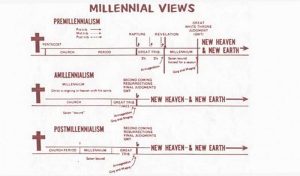
 The Church Fathers, particularly in the second century, largely supported **premillennialism**, believing that Christ would return to establish a literal thousand-year reign on earth. Notable proponents included **Justin Martyr** and **Irenaeus**, who emphasized this belief in their writings as a response to Gnostic teachings and to affirm the physical resurrection of the dead.
Premillennialism is the belief that Christ will return to establish a literal thousand-year reign on earth. This view was notably supported by several early Church Fathers, particularly in the second century.
Key Proponents of Premillennialism
Notable Church Fathers
|
Church Father
|
Time Period
|
Contributions to Premillennialism
|
|
Justin Martyr
|
c. 100 – c. 165
|
Affirmed a future reign of Christ for a thousand years in Jerusalem.
|
|
Irenaeus
|
c. 130 – c. 202
|
Defended premillennialism against Gnostic teachings, emphasizing resurrection.
|
|
Papias
|
c. 60 – c. 130
|
Believed in a future earthly kingdom established by Christ.
|
|
Tertullian
|
c. 155 – c. 220 AD
|
Asserted that a kingdom is promised to us upon the earth. Asserted this from Ezekiel and Apostle John.
|
Justin Martyr‘s key writings on premillennialism include his “Dialogue with Trypho,” where he expresses his belief in a future resurrection of the dead and a thousand-year reign of Christ in a rebuilt Jerusalem. He emphasizes that this view was shared by many “right-minded Christians” of his time, indicating its acceptance as an orthodox belief.
Irenaeus defended premillennialism by emphasizing the bodily resurrection of the dead and the physical return of Christ, countering Gnostic beliefs that dismissed the material world as evil. He argued that God’s creation was inherently good and that the faithful would reign with Christ in a renewed earthly kingdom for a thousand years.
Papias held that the millennium described in Revelation 20 would be a literal, future, earthly reign of Christ. He believed this period would be characterized by abundant blessings and a renewal of creation, reflecting the fulfillment of Old Testament prophecies about a restored paradise.
Tertullian wrote; “inasmuch as it will be after the resurrection for a thousand years in the divinely-built city of Jerusalem, ‘let down from heaven,’ which the apostle also calls ‘our mother from above;’ and, while declaring that our politeuma, or citizenship, is in heaven”.
Reasons for Elaborating
-
Response to Gnosticism: The early Church Fathers promoted premillennialism as a counter to Gnostic philosophies, which often denied the physical resurrection and the material world.
-
Physical Resurrection: The belief in a literal thousand-year reign was closely tied to the affirmation of bodily resurrection, a key tenet of early Christian faith.
Historical (Worldly?) Evolution
-
Second Century Dominance: Premillennialism was a dominant belief among early Christians, particularly in Asia Minor, where figures like Papias and Irenaeus were influential.
-
This early support for premillennialism highlights the theological acceptance within the early Church and the foundational beliefs that shaped Christian eschatology.
-
Premillennialism influenced many early Christians, including Irenaeus and others, the view fell out of favor in the fourth century as allegorical interpretations of Revelation became dominant, particularly through the influence of Origen and Augustine. Over time, especially after Augustine’s writings, the Church began to shift towards amillennialism, which interprets the millennium more symbolically rather than literally.
Premillennialism is as old as His Church
Premillennialism is the belief that Christ will return to establish a literal thousand-year reign on earth. This view was notably supported by several early Church Fathers, particularly in the second century.
Key Proponents of Premillennialism
Notable Church Fathers
Church Father
Time Period
Contributions to Premillennialism
Justin Martyr
c. 100 – c. 165
Affirmed a future reign of Christ for a thousand years in Jerusalem.
Irenaeus
c. 130 – c. 202
Defended premillennialism against Gnostic teachings, emphasizing resurrection.
Papias
c. 60 – c. 130
Believed in a future earthly kingdom established by Christ.
Tertullian
c. 155 – c. 220 AD
Asserted that a kingdom is promised to us upon the earth. Asserted this from Ezekiel and Apostle John.
Justin Martyr‘s key writings on premillennialism include his “Dialogue with Trypho,” where he expresses his belief in a future resurrection of the dead and a thousand-year reign of Christ in a rebuilt Jerusalem. He emphasizes that this view was shared by many “right-minded Christians” of his time, indicating its acceptance as an orthodox belief.
Irenaeus defended premillennialism by emphasizing the bodily resurrection of the dead and the physical return of Christ, countering Gnostic beliefs that dismissed the material world as evil. He argued that God’s creation was inherently good and that the faithful would reign with Christ in a renewed earthly kingdom for a thousand years.
Papias held that the millennium described in Revelation 20 would be a literal, future, earthly reign of Christ. He believed this period would be characterized by abundant blessings and a renewal of creation, reflecting the fulfillment of Old Testament prophecies about a restored paradise.
Tertullian wrote; “inasmuch as it will be after the resurrection for a thousand years in the divinely-built city of Jerusalem, ‘let down from heaven,’ which the apostle also calls ‘our mother from above;’ and, while declaring that our politeuma, or citizenship, is in heaven”.
Reasons for Elaborating
Response to Gnosticism: The early Church Fathers promoted premillennialism as a counter to Gnostic philosophies, which often denied the physical resurrection and the material world.
Physical Resurrection: The belief in a literal thousand-year reign was closely tied to the affirmation of bodily resurrection, a key tenet of early Christian faith.
Historical (Worldly?) Evolution
Second Century Dominance: Premillennialism was a dominant belief among early Christians, particularly in Asia Minor, where figures like Papias and Irenaeus were influential.
This early support for premillennialism highlights the theological acceptance within the early Church and the foundational beliefs that shaped Christian eschatology.
Premillennialism influenced many early Christians, including Irenaeus and others, the view fell out of favor in the fourth century as allegorical interpretations of Revelation became dominant, particularly through the influence of Origen and Augustine. Over time, especially after Augustine’s writings, the Church began to shift towards amillennialism, which interprets the millennium more symbolically rather than literally.
Published in Bible, Church History, Commentary, Resources and Teaching